
Virtual reality
New technologies for financial planning – Virtual reality
[cherry_spacer size=”20″]
Virtual and augmented reality
Virtual reality completely replaces the user’s real-world environment with a simulated one. Augmented reality is mixed reality – a combination of real and virtual worlds.
The ever-increasing computer power coupled with 5G’s ability to transfer large amounts of data very quickly will give a boost to this technology.
Currently, a compelling experience requires a fairly powerful computer connected by wires to a large and expensive headset. With 5G the wires will vanish and engineers will shrink the headset, possibly to glasses not much larger than reading glasses and ear buds.
[cherry_spacer size=”12″]
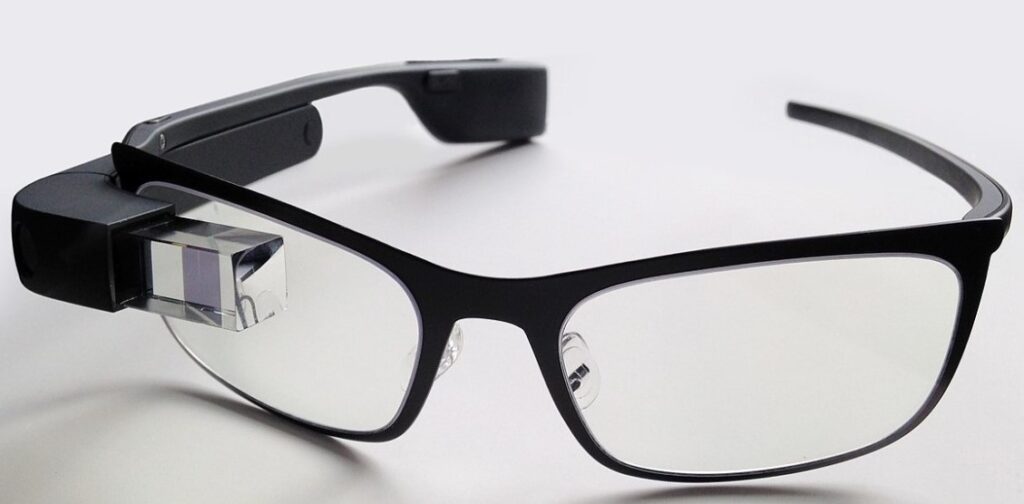
Google glass
[cherry_spacer size=”12″]
 [cherry_spacer size=”12″]
Google Glass displays information on the glasses while communicating with the Internet via natural language voice commands. The original prototype in 2011 weighed nearly 4 kgs which has been reduced to the same weight as normal glasses. Packed into the frame are WiFi, Bluetooth, Battery, camera and USB connection. The current price is over AU$2,000 but this is sure to come down.
[cherry_spacer size=”12″]
Some of the world’s biggest companies in logistics, manufacturing and healthcare use Google glass in the workplace.
[cherry_spacer size=”12″]
Wearables
[cherry_spacer size=”12″]
Wearables like Google glass are also enjoying exponential growth that will be turbo-charged by 5G. Smart watches are getting smarter offering services like time, messaging, GPS, heart rate, blood pressure, fitness measurements and more.
[cherry_spacer size=”12″]
Wearables could “augment” the human body, replacing defective body parts like limbs that could even be controlled by a person’s thoughts.
[cherry_spacer size=”12″]
How could financial planning use this technology?
[cherry_spacer size=”12″]
An adviser and client, wearables like Google Glass, taking advantage of 5G, AI like Alexa, they could communicate in a normal conversational manner but using augmented reality the adviser could introduce graphical projections, current valuations, instant calculations, and info-grams.
[cherry_spacer size=”12″]
This could be a rich, rewarding experience at very low time/cost.
[cherry_spacer size=”12″]