
AI Agents
For those who are still wondering, an AI agent is a computer program that can observe, decide, and act on its own to achieve a goal.
Unlike traditional AI that respond to a single prompt, agents operate in a loop: they observe → reason → act → observe the results → adjust. They break complex tasks into steps, use tools (like searching the web, writing code, or calling APIs), and adapt their approach based on feedback.
Think of it as the difference between asking someone a question versus hiring them to complete a project—agents handle multi-step workflows, not just one-off responses.
They can write code, build a marketing plan, provide a legal opinion, comment on medical results, create videos, and much more, all for around $1 a day, a cost that is expected to fall.
Agents are getting easier to create as well. Gemini 3 lets you describe the agent you want (in natural language), and Gemini will create it.
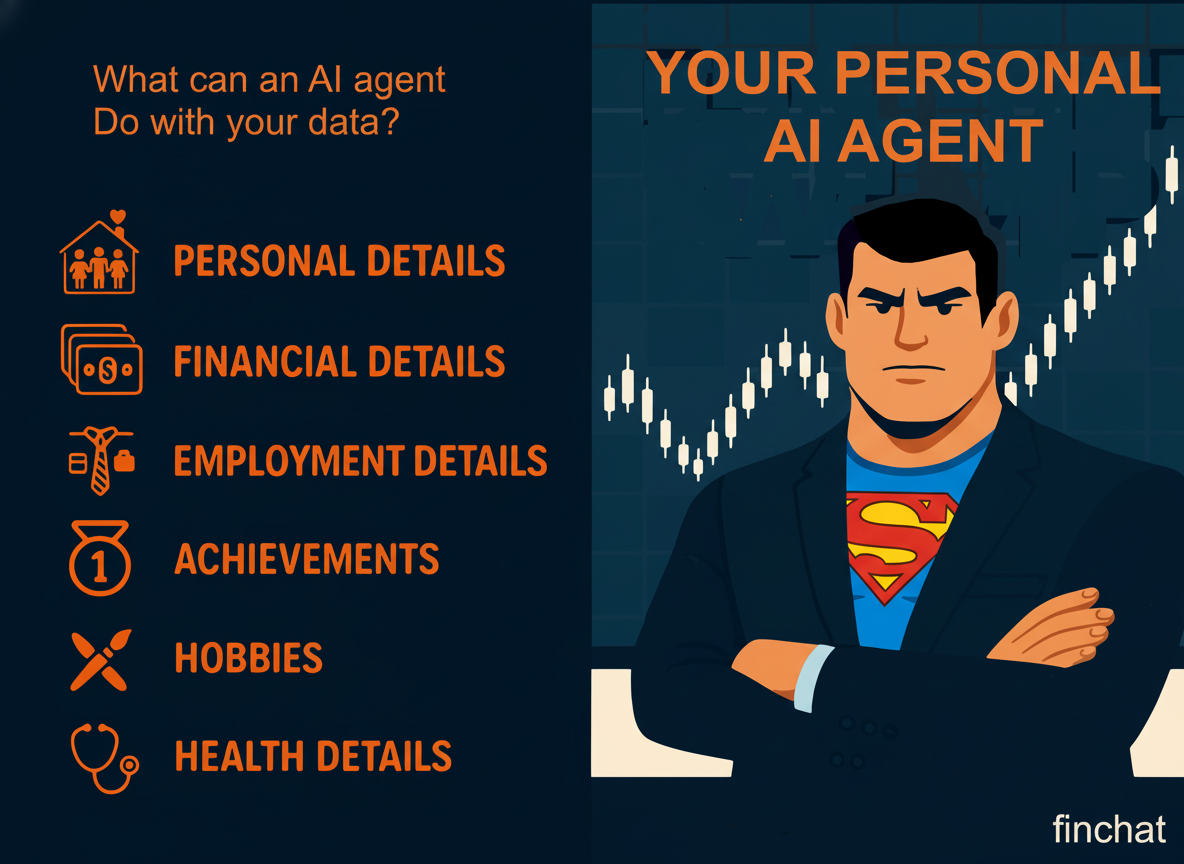
If AI has access to your personal, financial, health, employment, and lifestyle details, you could give it a job advertisement, and it will create the perfect application, targeting the essential job requirements. It could also complete most other applications, such as passports, life insurance, and loans, and, in the near future, it will lodge them too.
Will AI have your data and remember it? Will you need to input the same data every time? Will most people have their data on a spreadsheet that they upload to AI? What about privacy and security? The answers are still playing out, but the productivity benefits are so great, all obstacles should be overcome.
We aren’t there yet. AI isn’t that great at reasoning. For over a year, we at Finchat (www.finchat.com.au) have been asking all the main providers a somewhat simple financial planning question that demands reasoning, and all of them fail. It should be noted, though, that in the last test, ChatGPT got very close, just missing one small step toward the right answer.Activate to view larger image,